|
 |
Early - Baroque - Classical - Contemporary music |
NEW EDITIONS |
 |
|
Click the red link for more information
Click the coverpicture to order
Charles Bochsa |
|
"By producing this edition, harp repertoire has recovered a glorious piece. Well worthy of a place in a concert programme, or as study material for those interested in rediscovering the developing technique that Bochsa was so instrumental in creating, the music is a delight, and this well thought out edition makes it both accessible and legible."
To read the whole review
click here |
|
|
|
Wolfgang Amadeus Mozart |
|
“… challenging, but very rewarding to play… this is another exemplary edition from Edition HH, this time of a fascinating re-working of a masterpiece which merits attention in a whole range of contexts.”
To read the whole review
click here |
|
|
|
Joseph Haydn/Paul Wranitzky |
|
| In these "amplifications" of three of Haydn's best-known string quartets, Op. 71, Wranitzky expanded the ensemble to nine players by adding flute, oboe, two horns and double bass, making it one of the larger divertimento scorings for the period. First published in 1800, but overlooked by performers ever since, they are now issued here as a 3-volume set in full score with set of parts. The first of the group received its modern premiere on 1 March 2008 in New York’s Carnegie Hall.
|
|
|

|
François Devienne |
|
“This flute concerto, the latest in Edition HH's enterprising and rewarding classical series, with its dazzling and uncompromising virtuosity, is a typical example of Devienne's free and ebullient writing. ... This is terrific practice material for any flautist, and would make an impressive competition piece. Jennifer Caesar's edition is beautifully clear, with a minimum of editorial interference.”
To read the whole review
click here |
|
|
|
Luna Alcalay |
|
| Austrian composer Luna Alcalay drew her inspiration for this piece from two of Leonardo da Vinci’s philosophical reflections, which she has set for the unusual combination of mezzo-soprano, oboe d’amore and piano. The subtle interplay of the two "voices", and the short, colourful pianistic gestures that punctuate this sustained conversation, reveal a musical mind of singular depth and imagination.
|
|
|
Mezzo soprano, Oboe d'amore, piano
|
|
|
|
Tomaso Albinoni |
|
| In this cantata, the protagonist is the male lover about to depart, who expresses pain at leaving his beloved, promises to remain true to her and finally begs her to dry her tears since he is confident that, somehow, they will be reunited. Unusually for Albinoni, there are three arias, the third of which is dance-like in the composer's best faux-naïf vein. The first aria is noteworthy for its vigorous bass line, whose jagged quality contrasts strongly with the smoothness of the vocal line. |
|
|
|
Tomaso Albinoni |
|
| This cantata takes the form of a lover's plea to Clori, who is proving 'hard to get'. He begs her finally to yield to his love. Even if she does not reciprocate it, she should at least soothe his pain temporarily by glancing in his direction. As so often in Baroque cantatas, the exaggerated emotion seems to be ironised to some extent: Albinoni and his poet simultaneously express and critically observe the lover's feelings. The two arias are nicely contrasted, the first containing a large amount of written-in vocal ornamentation and the second, in contrast, conveying a bluff breeziness. |
|
|
|
Tomaso Albinoni |
|
| This cantata is on the common subject of a lover's jealousy. Clori falls in love with Fileno at first sight, but he proves unfaithful to her and a lovers' quarrel ensues. The music, by turns wistful and assertive, follows Clori's see-sawing emotions, ending with a show of defiance. Albinoni's finely chiselled, undulating vocal line demonstrates his great gifts as a melodist. |
|
|
|
Christian Ernst Graaf |
|
| As a musical gesture of sympathy towards the current financial problems, we present the first modern edition of the Duo Economique by Christian Ernst Graaf, calling for two players, four hands and two bows but only one violin. A certain intimacy is necessary for the two performers (explained and illustrated in the Introduction) but the two movements are consolingly melodious and offer a pleasant antidote to our straitened times. An appropriate present for any musical banker or stockbroker…
|
|
|
|
Joseph Haydn |
|
Armida is Haydn’s most highly regarded opera – even the composer himself, on completing the score in 1783, referred to it as his best work. Topically interesting – love versus duty in the time of war – Armida is suitable for large and small opera companies alike and offers tremendous scope for imaginative staging. Based on the autograph score in the Royal College of Music, London, and on manuscript fragments in Eisenstadt, this edition has been prepared by the distinguished Haydn conductor Anton Gabmayer, since 1992 Musical Director of the Haydn Festival at Eisenstadt, with which Edition HH has forged close links. (Full score (HH402.fsc), vocal score (HH402.voc), instrumental parts (Hire))
|
|
|
|
Wolfgang Amadeus Mozart |
|
“Idiomatic and laudable, with keen attention paid to changes in texture and register ... this version of the concerto has genuine scholarly value and offers insights into the dissemination of Mozart's works. ... It certainly has appeal as a chamber music novelty, or as a very useful alternative means of getting to know the original from the inside.”
To read the whole review
click here |
|
|
|
Nicolas Gilbert |
|
| Congratulations to one of Edition HH’s most prestigious young composers, Nicolas Gilbert, who has just been named ‘Composer of the Year’ in his native Quebec, and has received the ‘Première of the Year’ Award for his Circuits parallèles. For details click on this link
|
|
|
|
Joseph Haydn |
|
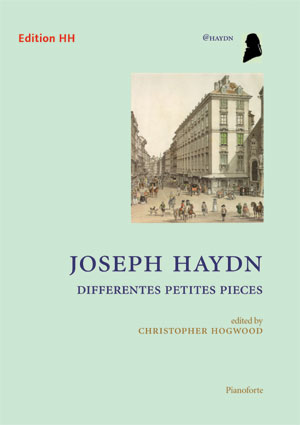
| The title Differentes petites pièces signifies that the collection was drawn from assorted musical genres (symphonies, operas, string quartets etc.), distinguishing it from the majority of anthologies of this period, which gathered together works of a single genre (all quartets, all songs, all sonatas etc.). In performance terms, the pieces are effective on any expressive keyboard instrument and were designed to present few technical challenges to the amateur or student player.
|
|
|
|
François Devienne |
|
| François Devienne's music has long been esteemed for its grace and balance, and his instrumental sonatas are among the finest of their kind in the classical period. This sonata for clarinet, a supreme example, is faithfully reproduced with editorial notes and commentary. The original articulation has been retained so that the developing player of both the classical and modern clarinet can deepen their understanding of the articulated style of the period. Highly recommended for AB Grades 7 or 8 upwards.
|
|
|
|
Catalogue of works |
|
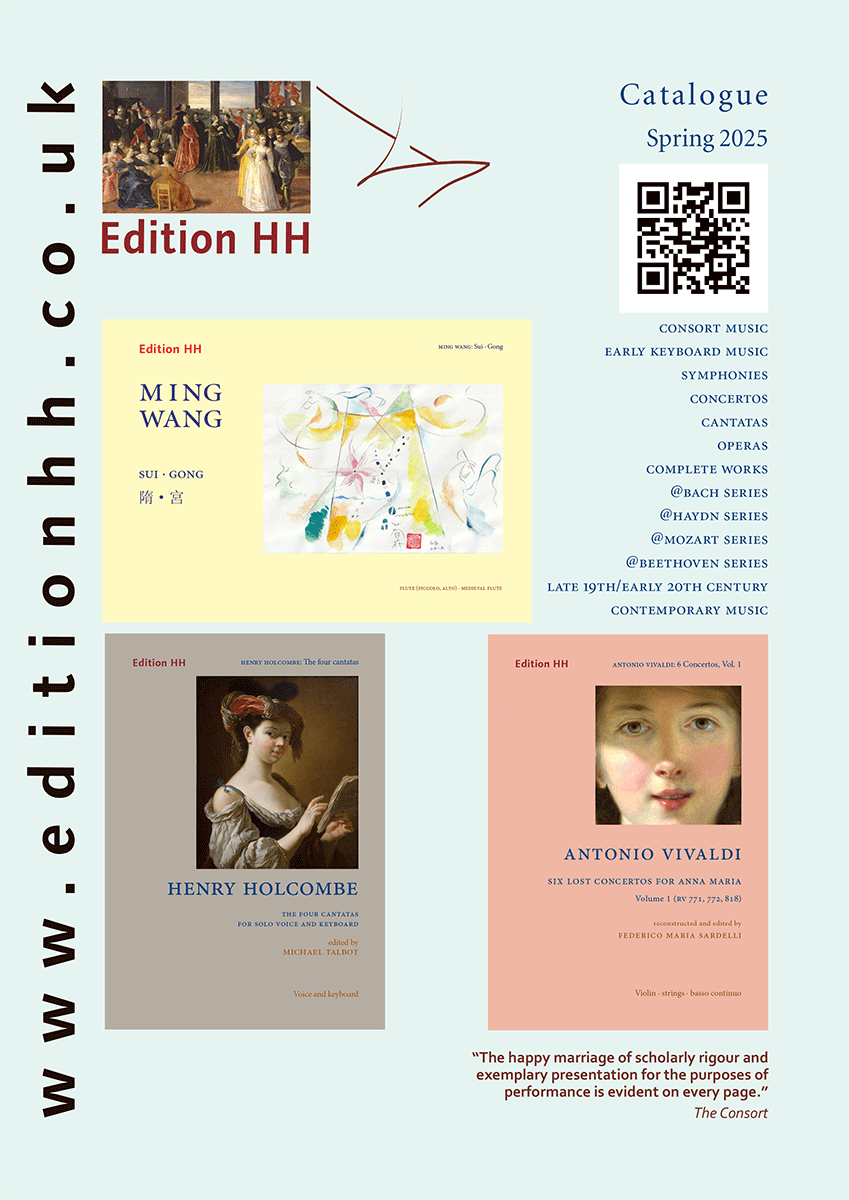
| You can download the current catalogue (PDF, 632KB) by clicking the cover on the right.
|
|
|
|
Edition HH Ltd 68 West End Launton Nr. Bicester Oxfordshire OX26 5DG England Tel: +44 1869241672
Fax: +44 1869 323509
Email Edition HH
Distribution in the UK Music Distribution Services
7-12 Raywood Office Complex
Leacon Lane
Charing
Kent
TN27 0EN
England
Tel: +44 1233 712233
Fax: +44 1233 714948
Email Music Distribution Services
|
| | | | | | | | |