|
 |
Early - Baroque - Classical - Contemporary music |
QUALITY EDITIONS |
 |
|
Click the red link for more information
Click the coverpicture to order
Giuseppe Cambini |
|
| The Italian composer and violinist Giuseppe Cambini wrote the first works for what was to become the standard wind quintet, and his Six Trio Concertans op. 45 were almost certainly the first ever compositions specifically for flute, oboe and bassoon. These expertly crafted pieces, with their formal simplicity and classical elegance, abound in idiomatic writing for each of the three instruments. The first volume was enthusiastically received when released in May. This is the second volume with the trios 4, 5 and 6. |
|
|
|
Our editions get favourable reviews in The Consort:
W A Mozart / C F G Schwencke |
|
| Dating from around 1805, this arrangement is highly effective and far more practical and convenient to realise than the original Serenade for 13 Winds. Furthermore, the current edition is exemplary; this is therefore a publication that chamber musicians should not miss. ... I give this my unreserved recommendation. Click here to read the review
|
|
|
|
Joseph Haydn |
|
| These delightful pieces will provide excellent teaching material for harpsichord, clavichord or forte piano, as well as a most pleasant diversion for more experienced players. Click here to read the review |
|
|
|
Fitzwilliam Handeliana |
|
| The editing is exemplary and the printing clear. ... this selection offers plenty of excitingly fresh material for harpsichordists to include in concerts. Click here to read the review
|
|
|
|
Fitzwilliam Handeliana |
|
| These pieces provide a welcome addition to the 17th-century keyboard repertoire ... Andrew Woolley gives a concise explanation of his criteria for selecting these pieces, and a most readable account of the form of the pieces. His comments on ornamentation, notation and performance practice will repay careful reading; his critical commentary is thoroughly cross-referenced. Click here to read the review
|
|
|
|
Christian Ernst Graaf |
|
| Graaf's Duo Economique for two players, two hands, two bows and one violin is a novelty piece ... performing the work can be great fun as well as enormously frustrating! ...this Duo Economique could soon develop into a Duo Romantique! Click here to read the review
|
|
|
|
W A Mozart / Anonymous |
|
| The work achieved here amounts to far more than commercial exploitation of someone else's music of recognised excellence. As an example of common contemporary practice, these expert and for the most part very effective arrangements offer, now as then, the means to keep this music alive in additional performance settings, especially but not exclusively among able amateurs. This edition can be warmly recommended. Click here to read the review
|
|
|
|
Ignaz Pleyel |
|
| ... it demonstrates a mastery of form, texture and orchestration. Striking dynamic and textural contrasts are evident throughout the symphony, which is characterised by melodic invention, wit and a deft lightness of touch. Click here to read the review |
|
|
|
BBC broadcasts Dreaming of Easter:
Timothy Raymond |
|
| BBC Radio Cymru broadcast the extraordinarily beautiful Dreaming of Easter played by the BBC National Orchestra of Wales conducted by Jac von Steen on 18 July. |
|
|
|
The Associated Board selects examination piece from @MOZART:
W A Mozart |
|
| ABRSM has selected the Polonoise from this collection as a Grade 4 examination piece for 2011 & 2012. |
|
|
|
August Eberhard Müller |
|
| The conductor, composer and keyboard player Eberhard Müller (1767–1817) was also principal flautist of the Leipzig Gewandhaus Orchestra. A confirmed Mozartian, he followed the classical pattern in his concertos for flute and orchestra, and the present work, published here for the first time since 1801, is an attractive, virtuoso piece that will surely win new converts to this versatile yet greatly underrated musician.
|
|
|
eds. Christopher Hogwood / Nikolai Jaeger
|
|
|
|
Timothy Raymond |
|
| Timothy Raymond) (*1953) chose a phrase from Sabine Baring-Gould's translation of the popular Basque Christmas carol ‘Sing Lullaby’ as the title of his new work. The carol melody, after its initial statement in a dreamlike passage near the beginning, undergoes a series of transformations, yet its ‘DNA’ is present in every single bar. Consisting of slow – at times, elegiac – music flanking fast central episodes, this is a short, hauntingly memorable orchestral piece by a modern master. |
|
|
|
François Devienne |
|
| The flautist, bassoonist, composer and teacher François Devienne became known as the 'French Mozart' because of the stylistic grace, formal balance and brilliance of his music. His sonatas for solo instrument and bass date from between 1788 and 1803 (the year of his death) and would have contributed to the didactic material used at the new Paris Conservatoire, established in 1795. Several of these works were so popular during the composer's lifetime that they were arranged for other instruments and published all over Europe. The present work, which has been realized and edited by the well-known British clarinettist Nicholas Cox, will be particularly suitable for reasonably advanced students of both modern and classical clarinets.
|
|
|
|
Luigi Cherubini |
|
We celebrate Cherubini’s 250th anniversary this year with an unusual publication. Although the composer is universally known for his operatic works and church music, one of his earliest publications (at the age of 23)
was this set of six sonatas for keyboard. Vivacious and melodically appealing two-movement works, they sound equally well on the harpsichord and the forte-piano — the latter instrument being popular around the court of the Grand Duke Leopold in Florence where the works were issued.
This edition, with full critical notes and facsimiles, also includes
editorial suggestions for the many small cadenzas and “lead-ins” which
are required as improvised extras in such music.
|
|
|
|
Nirmali Fenn |
|
|
Warmest congratulations to Nirmali Fenn on her recent (and well-deserved) appointment as a scholar at the Society of Scholars, University of Hong Kong. This will leave her free to compose whatever she wants for two years. A wonderful opportunity indeed, and we eagerly await the results! |
|
|
|
Tim Coker |
|
| Sonata for Descant Recorder and Piano was commissioned by Annabel Knight and Robin Bigwood for the 2010 Woodhouse Recorder Week Summer Concert Series. The sonata is based on material derived from medieval hexachords. It is characterized by syncopated, pounding rhythms and dramatic shifts of mood. Sections from the piece feature as incidental music for the 2010 York Mystery Play cycle. |
|
|
|
François Devienne |
|
| Devienne’s music has long been highly regarded for its qualities of grace and balance. The flute concertos, which the composer played at the Concerts Spirituels in the 1780s, reflect the elegance and brilliance of classical music in Paris at the time, earning him the title ‘the French Mozart’. Here in an edition for flute and keyboard.
|
|
|
|
Nirmali Fenn |
|
| Works by two of the 20th-century's greatest painters were the inspiration behind Nirmali Fenn's String Quartet: the title comes from a painting by Paul Klee, and the structural ideas are influenced by a book by Wassily Kandinsky. 'Winged Links' is a perfect reflection of the thematic behaviour and compositional method at work within this strikingly beautiful, original piece. |
|
|
|
Giovanni Paisiello |
|
| Though primarily known as an opera composer, Giovanni Paisiello did not neglect the instrumental repertoire. His Capriccio in D minor, written in St Petersburg for his pupil the Grand Duchess Maria Feodorovna and first published c.1799, is a fine example of this Southern Italian composer's keyboard style. |
|
|
|
Joseph Haydn |
|
| Haydn's delightful puppet-opera Philemon und Baucis, based on a mythical tale from Ovid, was written for a visit to Esterháza by the Empress Maria Theresa in 1773. The present version, created for Christopher Leith's Little Angel Theatre production at the 2003 Haydn Festival in Eisenstadt, is now available in this new practical performing edition and will attract both amateur and professional opera groups alike.
|
|
|
|
Giuseppe Cambini |
|
| The Italian composer and violinist Giuseppe Cambini wrote the first works for what was to become the standard wind quintet, and his Six Trio Concertans op. 45 were almost certainly the first ever compositions specifically for flute, oboe and bassoon. These expertly crafted pieces, with their formal simplicity and classical elegance, abound in idiomatic writing for each of the three instruments. |
|
|
|
Early Italian keyboard music |
|
| The Harpsichord and Fortepiano journal praises Christopher Hogwood's 'exemplary' edition of early Italian keyboard dances, Balli per Cembalo. Click here to read the review. |
|
|
 |
George Frideric Handel |
|
| The second volume of the Fitzwilliam Handeliana series is largely made up of hitherto unfamiliar - and in some cases previously unidentified - 18th-century keyboard arrangements of Handel's music contained in the manuscript collection at the Fitzwilliam Museum, Cambridge. |
|
|
|
Tomaso Albinoni |
|
| These cantatas show the full range of Albinoni's style, which ranges from the slyly humorous to the deeply impassioned, from music of folk-like simplicity to intricate coloratura and rich chromatic harmony. Those who know only Albinoni's instrumental music may be surprised at the adventurousness of his vocal writing. The edition, which addresses the needs of both performers and scholars, includes a preface, a transcription of the poetic texts with English and German translations, and a critical report. |
|
|
|
Luna Alcalay |
|
| Viennese composer Luna Alcalay continues to enrich the solo instrumental repertory, on this occasion with a short piece for flute in which she exploits, with her customary mastery, the instrument's rich expressive potential. Skilfully judged variations of dynamics, phrasing, attack and tone colour, often in close succession – en passant ("in passing"), as the title suggests – all combine to create an eight-minute journey full of shifting light and atmosphere.
|
|
|
|
Johann Baptist Cramer |
|
| This set of three contrasted sonatas by the German pianist, composer and teacher Johann Baptist Cramer, or "Glorious John", as he was affectionately known in England, was dedicated to Haydn and first published in Vienna in 1799. All three works are models of classical clarity, and Cramer exploits the full range and sonority of the fortepiano, with exact indications of pedalling and dynamics. This new edition also includes useful extracts from his Instructions for the Piano Forte, which explain his ornamentation and markings and even distinguish between the grand piano and the smaller, square piano. |
|
|
|
Ming Wang |
|
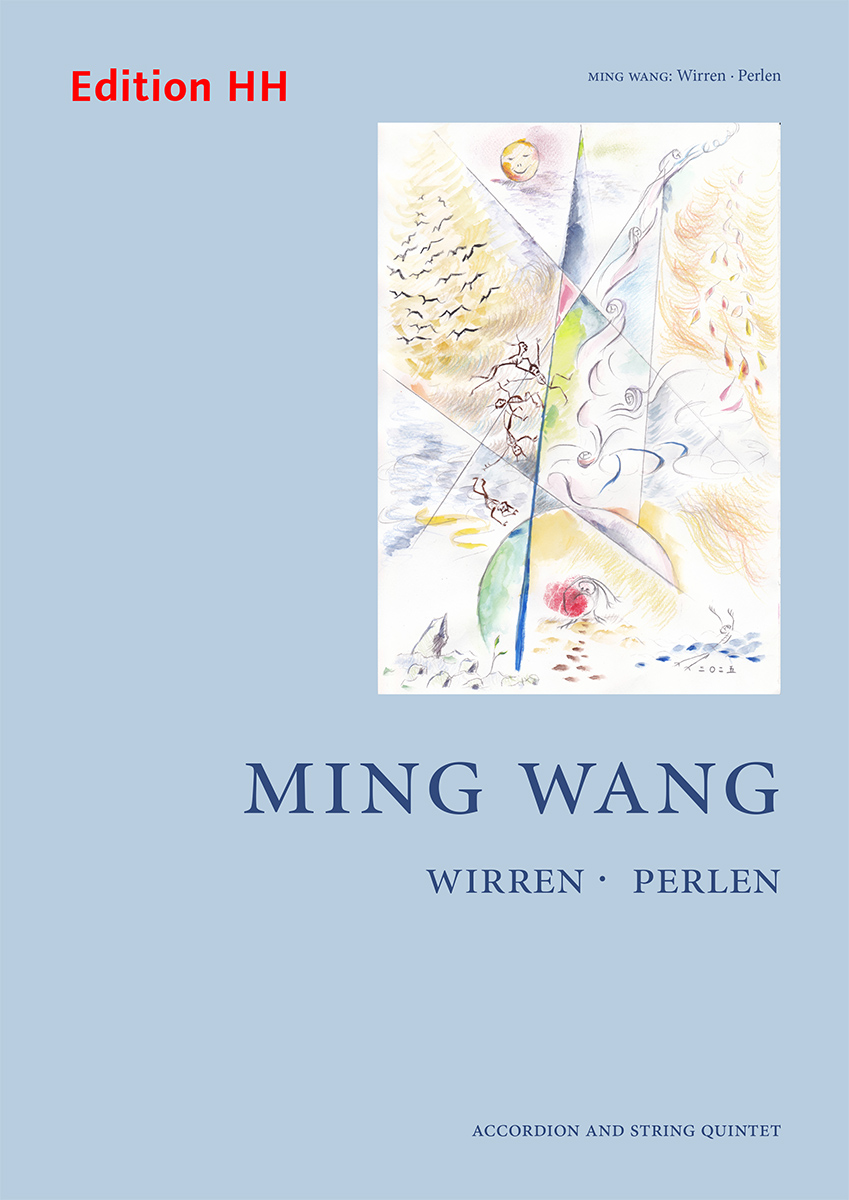
| The major inspiration behind this composition is the extraordinary variety of sounds produced by the flute, which numerous contemporary composers and players have exploited, to magical effect, in recent decades. The wide range of harmonics and multiphonics, the varied elements of breath and noise, the special ways of playing the instrument and the inexhaustible possibilities of tone colour are all brought into play in Ming Wang’s strikingly original new work. |
|
|
|
Schott Music Shop |
|
| The Schott music shop in London generally keeps all our editions in stock. |
|
|
48 Great Marlborough street, W1F 7BB
|
|
|
|
Catalogue of works |
|
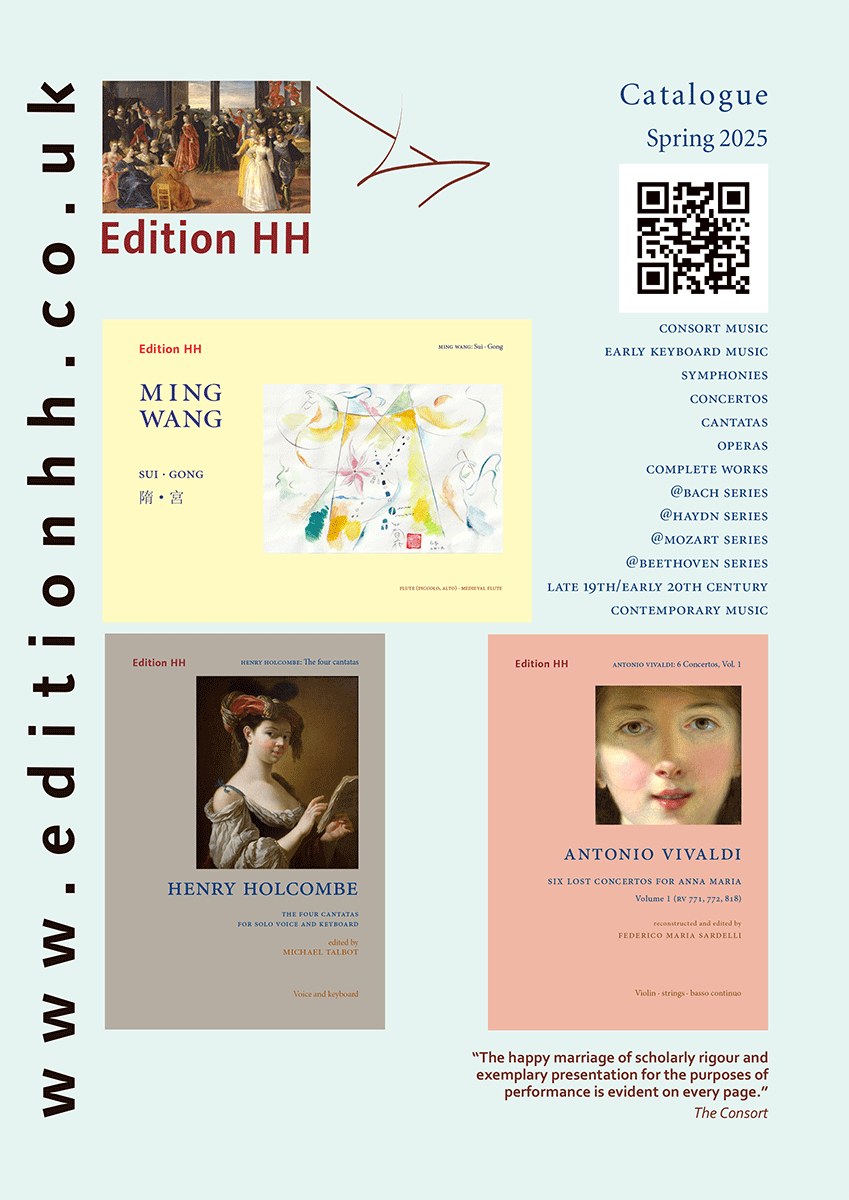
| You can download the current catalogue (PDF, 2MB) by clicking the cover on the right.
|
|
|
|
Edition HH Ltd 68 West End Launton Nr. Bicester Oxfordshire OX26 5DG England Tel: +44 1869241672
Fax: +44 1869 323509
Email Edition HH
Distribution in the United Kingdom Music Distribution Services
7-12 Raywood Office Complex
Leacon Lane
Charing
Kent
TN27 0EN
England
Tel: +44 1233 712233
Fax: +44 1233 714948
Email Music Distribution Services
Distribution in all other countries mds - music distribution services gmbh
Carl-Zeiss-Strasse 1
55129 Mainz
Germany
Tel: +49 6131 505 100
Fax: +49 6131 505 115/116
Email mds - music distribution services gmbh
|
| |